Study in Austria
Affordable | EU-recognized degrees | Safe & peaceful | Heart of Europe
Why Austria belongs on your shortlist
Austria is a beautiful, mountainous country in Central Europe, known for its Vienna-class education, classical music, and high-quality universities. For students from Nepal, it offers a powerful mix of low-cost or almost-free public-university education, English-friendly cities, and EU-style degrees that are respected worldwide. Whether you want to study in business, engineering, IT, medicine, or the arts, Austria gives you a strong academic foundation without the very high fees of some Western countries.
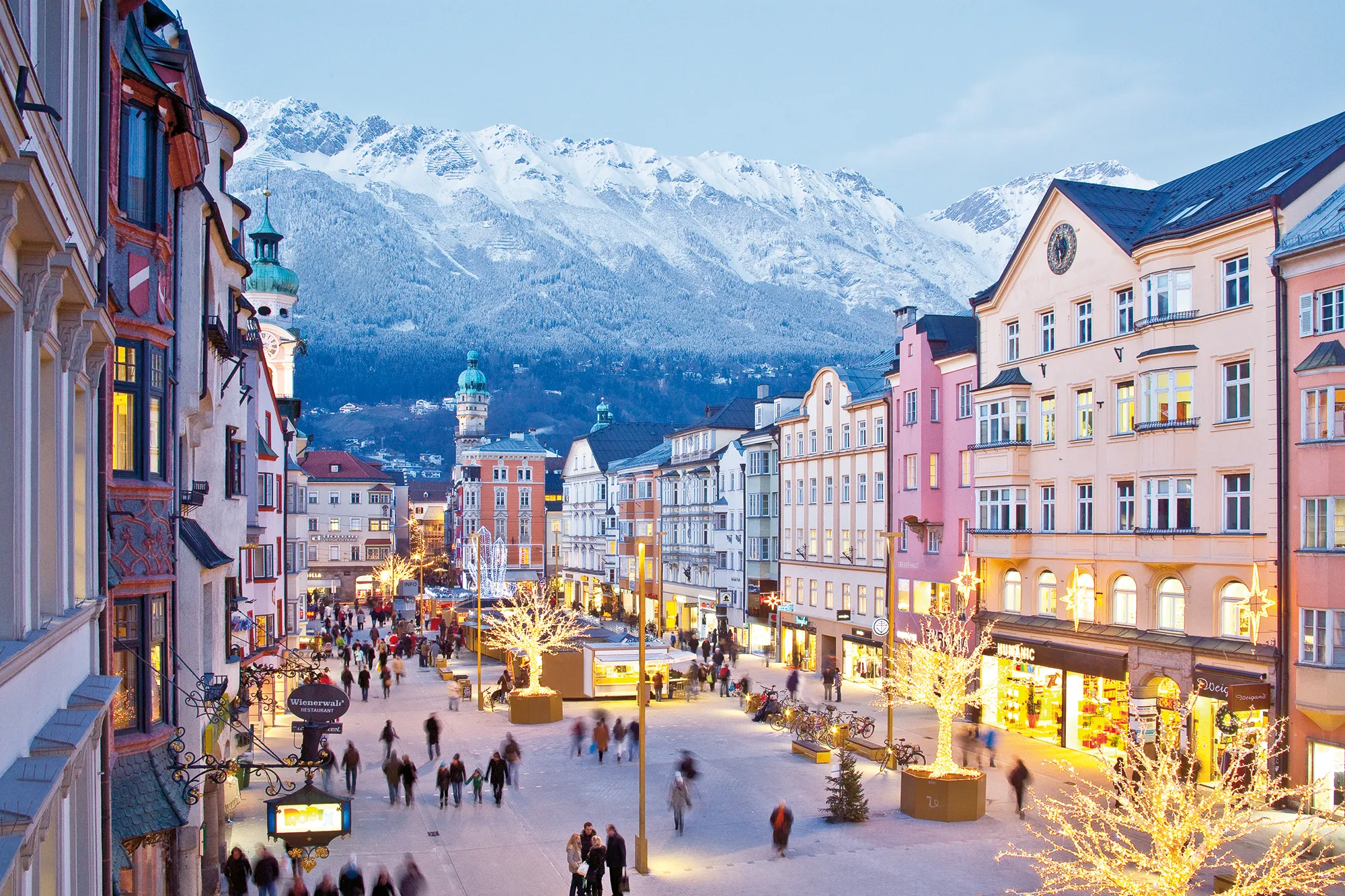
Another major advantage of studying in Austria is the excellent quality of life and student-friendly environment. The country is known for its safety, efficient public transportation, clean cities, and strong work-life balance, making it an ideal destination for international students. Cities like Vienna, Graz, and Linz offer vibrant student communities, cultural diversity, and opportunities for part-time work and research. Students also benefit from access to other European countries through the Schengen region, allowing them to explore Europe while gaining an internationally recognized education and valuable global exposure.
Quick facts about Austria
Why study in Austria?
Multilingual & Culturally Rich
German is the main language, but many graduate programmes are in English, and cities like Vienna, Graz, and Innsbruck are very international.
Affordable Universities
Many public universities in Austria charge only a small semester fee (~ EUR 726-750 per semester, roughly Rs 1.1-1.2 lakh) or, for some Nepali students, tuition-free education under special arrangements.
High Quality Education
Austrian universities like the University of Vienna, TU Wien, Johannes Kepler University Linz, University of Graz, and University of Innsbruck are well-ranked and research-oriented.
Safe, Clean & Student Friendly
Austria ranks among the safest countries in Europe, with low crime, clean cities, and good public transport-ideal for students studying abroad for the first time.
Central EU Location
From Austria, you can easily visit countries like Germany, Italy, Switzerland, and the Czech Republic during breaks.
Popular Universities in Austria


Step-by-step: study in Austria
Popular Programs for Nepalese Students
Many programmes are 1-2 years Master's, taught in English, and combine theory with practical projects.
- Business & Economics - International management, finance, marketing, and EU-style business law.
- Engineering & IT - Civil, Mechanical, Electrical, Computer Science, Data Science.
- Medicine & Health Sciences - Medicine, Pharmacy, Biotechnology, Nursing (with competitive entry).
- Tourism & Hospitality - With strong tourism industries and ski-based tourism in Tyrol and Salzburg.
Scholarships for Nepali Students
Austria offers several financial support options:
- The low-fee public-university structure itself acts like a scholarship, compared to other Western countries.
- University-specific scholarships: Some universities offer partial or full fee waivers for international students based on merit.
- External scholarships: Global and regional scholarships (e.g., Austrian Development Cooperation, Erasmus-related funds) sometimes support Nepali students.
At Race Educare, we help you identify suitable scholarships and build strong applications that match your profile and budget.
Required Documents for Austria Student Visa
- Valid passport (usually valid for at least 3 months beyond the intended stay, with at least 2 blank pages).
- Passport-size photos (3.5 x 4.5 cm, biometric, as per Austrian embassy format).
- Unconditional admission/enrollment letter from an Austrian university (Zulassung or enrollment letter on official letterhead).
- Academic documents: SLC/SEE, +2, and Bachelor's certificates and transcripts (with translations into English or German if needed).
- Proof of financial means: bank statements or sponsorship letters showing EUR 11,000-12,000 per year.
- Proof of health insurance: Austrian student health insurance or valid travel/health insurance with at least EUR 30,000 coverage.
- Proof of accommodation in Austria: rental agreement, dorm confirmation, or a temporary-stay letter.
- Completed visa/residence permit application forms (Type D Student Visa and/or Student Residence Permit form).
- Cover letter/motivation letter explaining your study plans, course choice, and return-to-Nepal intention.
- Language certificate (IELTS/TOEFL for English-taught programmes; A2/B1 German for German-taught programmes, as required by the university).
- Police clearance / no-criminal-record certificate (if requested by the embassy).
- Flight details (tentative or confirmed ticket, sometimes required).
Make sure all documents are organized, clearly copied, and translated/legalized where necessary before submitting your file at the Austrian Embassy or consulate.
Step-by-Step Austria Student Visa Application Process (from Nepal)
To study in Austria, Nepali students need a Type D Student Visa and, after arrival, a Student Residence Permit (Aufenthaltsbewilligung).
**Get Admission from an Austrian University**
- Choose a university and programme (Bachelor's, Master's, or preparatory college).
- Apply directly through the university's online portal and wait for an unconditional admission letter (Zulassung / enrollment letter).
**Confirm Visa Type and Embassy**
- Nepali students need a Student National Visa (Type D / Student Residence Permit - Student) for studies longer than 6 months.
- Applications are usually submitted at the Embassy of Austria in New Delhi, since Austria does not have a consulate in Nepal.
**Prepare Required Documents**
You generally need two sets (original + copy): personal documents (valid passport, recent biometric passport-size photos); academic & admission (university admission/enrollment letter, academic transcripts and certificates with translations if needed); financial proof (bank statements or sponsorship letters showing around EUR 11,000-12,000 per year); health & travel insurance (health insurance often required by the university, travel insurance covering at least EUR 30,000 in medical expenses); accommodation & personal statement (proof of accommodation, completed visa application form, short cover letter explaining your study plans and course choice).
**Book a Visa Appointment and Submit the File**
- Create an account on the Austrian embassy portal (if required) and book an appointment for the Student Visa (Type D).
- Pay the visa application fee (around EUR 120-150) and possible small administrative charges.
- Submit your complete file to the embassy and give biometric data (fingerprints and photo).
- Attend a short visa interview and explain your study plans, finances and return-to-Nepal intentions clearly.
**Wait for Visa Decision**
- Processing usually takes around 15-45 days (about 3-6 weeks) for student visas.
- Track your file using the reference number you received at the embassy.
**Receive Visa and Plan Your Travel**
- If approved, your passport will be returned with a Student National Visa (Type D).
- Check the validity dates and entry window (usually 90 days) and book your flight within that period.
**After Arrival in Austria**
- Within a few days of arrival, register your address with the local authorities (Meldezettel / registration office).
- Apply for your Student Residence Permit (Aufenthaltsbewilligung - Student) at the local immigration office; this is usually valid for 1 year and can be renewed.
- Complete final university enrolment, open a local bank account, and activate your health insurance.
Processing time is usually 4-8 weeks, so apply at least 3-4 months before your semester starts.
How Race Educare Supports You to Study in Austria
At Race Educare, we guide Nepali students through every stage of studying in Austria:
- University & Programme Selection: Matching your academic background and budget with the right Austrian university and course.
- Application Support: Help with SOPs, LORs, document checks, and applications to universities like the University of Vienna, TU Wien, JKU Linz, University of Graz, and University of Innsbruck.
- Scholarship Guidance: Information on low-fee structures, university-specific waivers, and external scholarship options.
- Visa File Preparation: Making your Austria student visa file embassy-ready, with correct financial proof, translations, and organization.
- Pre-Departure Briefing: Guidance on accommodation, travel, health insurance, and life in Austrian cities.
If you are ready to study in Europe with affordable fees, high-quality teaching, and a safe environment, Austria is a strong choice-and Race Educare is your partner in making it happen.
Why Choose Austria for Your Study Abroad Journey?
For Nepali students, Austria offers a balanced mix of affordability, safety, and academic quality. With low-cost public-university education, EU-style degrees, and good job-seeking and post-study options, it is a strong stepping-stone to careers in Europe or back home in Nepal. Whether you want to specialise in engineering, business, IT, tourism, or medicine, Austria's compact, well-organised system makes it easy to focus on studies and personal growth.